
The New Tenant Move-In Checklist Every Landlord Should Follow (Step-by-Step)
Your new tenant said yes. Now what?
You’ve found the right tenant. The lease is signed. Move-in day is around the corner.
This is the moment where things either feel smooth and organized… or rushed and a little chaotic.
We’ve been on both sides of that.
Early on, we thought handing over the keys was the finish line. Over time, we realized it’s actually the starting point for the tenant experience and one of the biggest opportunities to set the tone for everything that follows.
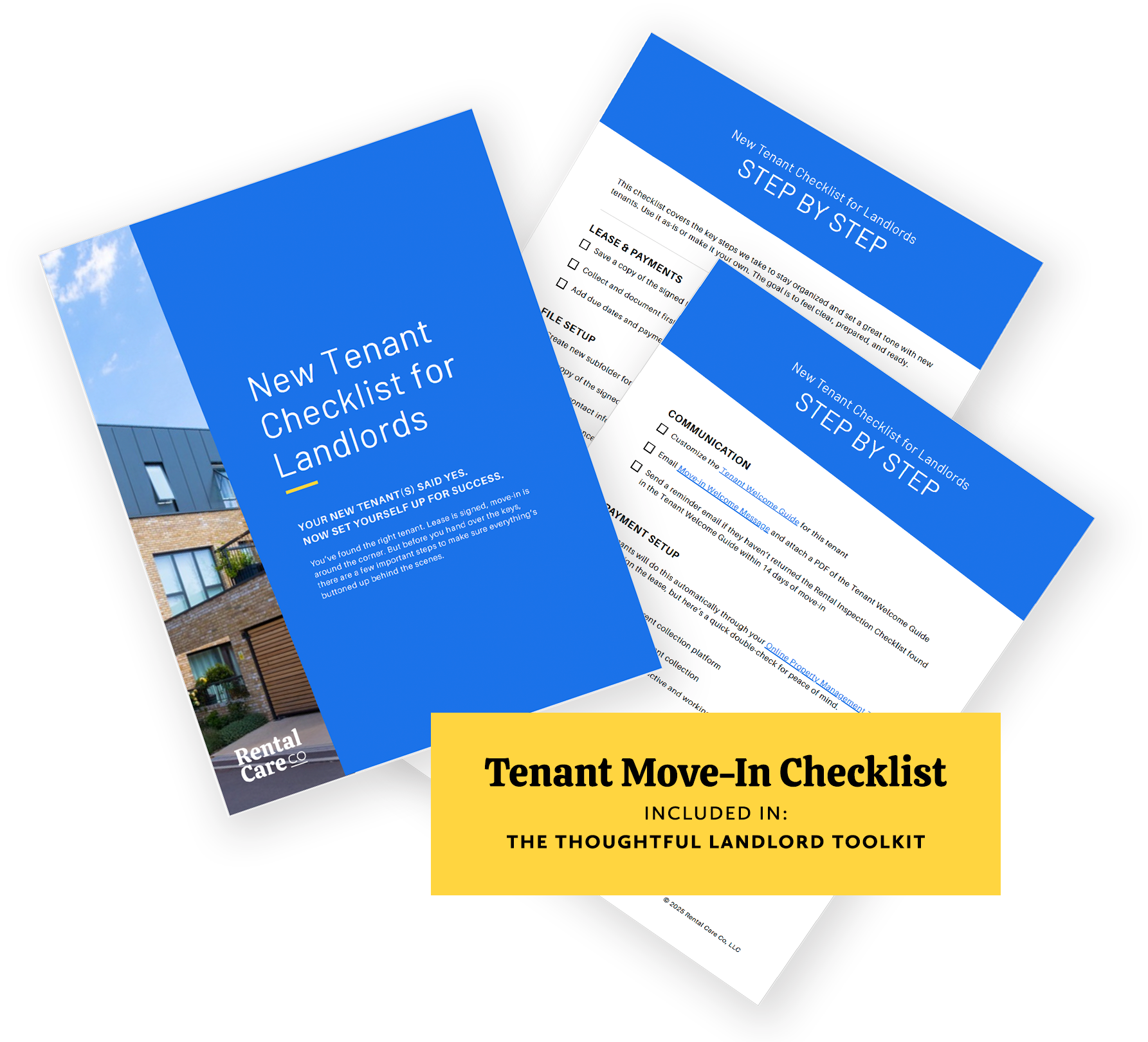
Now, we use a simple system every time we onboard a new tenant. It keeps us organized, reduces back-and-forth, and helps create a better experience for everyone involved.
This is the checklist we follow.
If you'd like a head start, you can grab our editable Tenant Welcome Guide to customize for your own property. And if you're looking for the complete onboarding system—including this checklist, trackers, templates, and more—everything is included in our Thoughtful Landlord Toolkit.
Why the move-in process matters more than you think
Move-in isn’t just logistics.
It’s where tenants decide:
How organized you are
How responsive you’ll be
How much they can trust you
A thoughtful, well-prepared move-in:
Reduces confusion
Prevents future issues
Makes tenants feel taken care of
Which, in our experience, leads to:
Longer stays
Better communication
Less stress for everyone
The new tenant move-in checklist (step-by-step)
This is a simplified version of the system we use. You can follow it as-is or adapt it to your own process.
1. Lease & payments
Before anything else, make sure the basics are fully buttoned up.
Save a copy of the signed lease in an organized folder
Collect and document first month’s rent and security deposit
Add rent due dates and reminders to your calendar or system
Why this matters:
This is your foundation. If this part is messy, everything else will be too.
2. File setup
This is where most landlords skip steps and regret it later.
Create a dedicated folder for the tenant
Store the lease, disclosures, and key documents in one place
Record tenant contact information
Add key details to your property tracker or system
Why this matters:
When something comes up later, you don’t want to be digging through emails trying to find information.
3. Prep the property
This is your last chance to make sure everything is truly ready.
Complete any repairs or updates before move-in
Take timestamped move-in photos (inside and out)
Confirm utilities are active or transferred
Plan how you’ll hand off keys (in person, lockbox, etc.)
Why this matters:
This protects both you and your tenant and avoids confusion later.
4. Communication
This is where thoughtful landlords really stand out.
A lot of landlords send a handful of separate emails and attachments:
The lease
Utility information
Maintenance instructions
Move-in reminders
Emergency contacts
It works... but it also means tenants have to dig through their inbox every time they have a question.
Instead, we combine all of that into one customized Tenant Welcome Guide that every new tenant receives before move-in. It becomes their go-to reference instead of another forgotten attachment.
Along with the guide, we also:
Send one clear move-in email with everything they need
Explain how to request maintenance
Set expectations for communication and response times
Share any property-specific details before move-in day
Why this matters:
Good communication doesn't just answer questions—it prevents them. A little organization upfront creates a smoother move-in and saves everyone time later.
5. Payment setup
Even if your platform handles most of this, it’s worth double-checking.
Add tenant to your rent collection system
Set up recurring payments
Confirm payment method is working
Why this matters:
You don’t want to discover issues when rent is already late.
The mistakes we’ve made (so you don’t have to)
We didn’t always follow a system like this. And we felt it.
A few things we learned the hard way:
Assuming we’d “remember where we saved things”
Not documenting move-in condition clearly
Sending incomplete or unclear instructions
Fixing things reactively instead of proactively
None of these seem like a big deal in the moment. But they add up quickly.
The thoughtful landlord approach
We've found that being a thoughtful landlord isn't usually about doing more.
It's about making the experience a little easier for the people who are about to make your rental their home.
Sometimes that's as simple as giving them one place to find everything they need before move-in day.
A smooth move-in lasts a day. A thoughtful first impression can shape the entire lease.

WANT TO SKIP THE SETUP?
If you’re reading this thinking:
“I get it… but I don’t want to build all of this from scratch”
That’s exactly why we created The Thoughtful Landlord Toolkit.
Continue building your thoughtful landlord system
If you found this helpful, these are great next steps:
What to Include in a Tenant Welcome Guide (and Why It Matters)
Start every tenancy with clarity and a strong first impression.The Simple Rental Property Expense Tracker Every Landlord Should Use
Stay organized and avoid headaches at tax time.Why Caring Landlords Make More Money (And How You Can Too)
See how thoughtful management leads to better long-term outcomes.