
What Rental Property Expenses Are Tax Deductible? (Simple Landlord Guide)
Am I actually tracking the right things?
That’s the question most landlords end up asking at some point.
You might already be tracking expenses. Maybe you even have a spreadsheet or system going.
But when tax time rolls around, there’s still that moment of:
“Wait… does this count?”
We’ve been there.
Early on, we weren’t always sure what qualified as a deductible expense and what didn’t. And when you’re not sure, you either:
miss things you could have deducted
or second-guess everything
Neither feels great.
So we simplified it.
This is a clear, no-jargon breakdown of what rental property expenses are typically tax deductible, and how to think about them as a landlord.
What “tax deductible” actually means (in real terms)
At a basic level:
A tax-deductible expense is something you can subtract from your rental income to reduce how much you’re taxed on.
In other words:
👉 it lowers your taxable profit
For landlords, this usually includes:
costs to maintain the property
costs to operate the rental
costs to manage tenants
You don’t need to memorize tax law.
You just need to understand what types of expenses generally fall into those buckets.

WANT TO SKIP THE SETUP?
If you’re thinking:
“I understand what to track… I just don’t want to build the system from scratch”
That’s exactly why we created The Thoughtful Landlord Toolkit.
It includes:
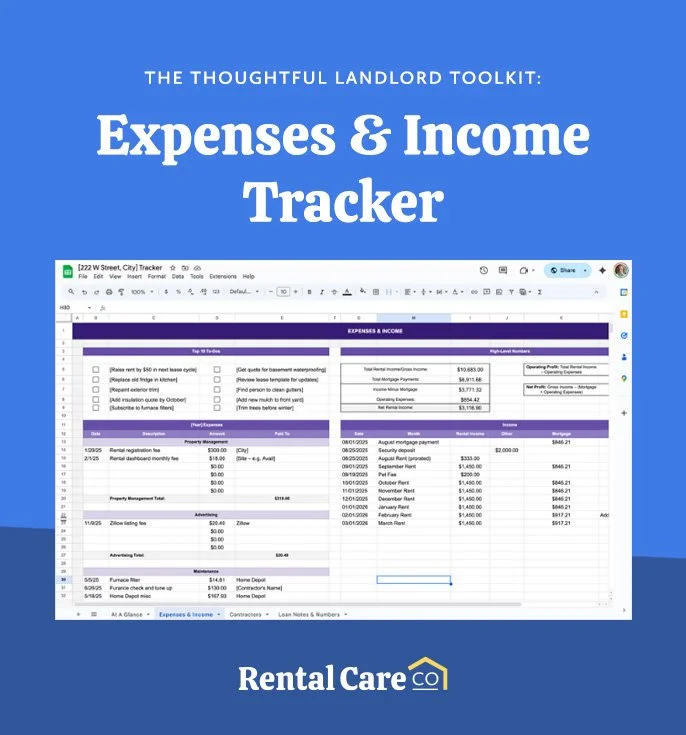
A built-in expense tracker with categories already set up
A simple system for organizing your rental info
Templates and tools we use ourselves
The most common rental property tax deductions
These are the core categories most landlords can deduct.
Mortgage Interest
If you have a loan on the property, the interest portion of your mortgage payment is typically deductible.
Not the full payment. Just the interest.
Property Taxes
Annual property taxes paid to your city or local government.
Simple, but important to track separately.
Insurance
Your landlord insurance policy (and any additional coverage tied to the property).
Repairs & Maintenance
This is one of the biggest and most common categories.
Generally includes:
fixing something broken
keeping the property in good working condition
Examples:
plumbing repairs
appliance fixes
patching drywall
👉 These are usually deductible in the year they happen.
Utilities
If you cover utilities for the property, they typically count:
water
gas
electric
trash
Property Management Fees
If you use a property manager or platform that charges fees, those costs are usually deductible.
Professional Services
Anything you pay for expert help:
accountant
attorney
bookkeeping
Supplies
Small purchases that are easy to overlook:
light bulbs
cleaning supplies
furnace filters
basic tools
Individually small. Collectively meaningful.
Marketing & Leasing Costs
Expenses related to finding tenants:
listing fees
photography
tenant screening
Travel (if applicable)
If you travel to check on the property, meet contractors, or handle repairs, mileage or travel-related expenses may qualify.
How to build your monthly tracking system
You don't need fancy software. A simple spreadsheet works beautifully.
👉 We already created that spreadsheet for you as part of The Thoughtful Landlord Toolkit.
Here's the system:
Step 1: Create a Monthly Tracker
Set up columns for:
Date
Expense Category
Description
Amount
Receipt? (Yes/No)
👉 Read: The Simple Rental Property Expense Tracker Every Landlord Should Use
Step 2: Enter Expenses Weekly (Not Annually)
Don't wait until tax time. Every week, spend 10 minutes entering expenses. This is the secret to staying organized.
Step 3: Organize Receipts
Digital: Take photos of receipts and file them by month
Physical: Use a folder for each month
Email confirmations: Forward to a dedicated "Rental Expenses" email folder
👉 Read: How to Organize Rental Property Receipts (Without Stress at Tax Time)
Step 4: Monthly Reconciliation (Takes 15 Minutes)
At the end of each month:
Total your expenses by category
Verify receipts match entries
Note any missing documentation
Step 5: Annual Summary
At year-end, your spreadsheet automatically totals each category. Hand this to your CPA. Done.
Repairs vs. improvements (this is where it gets confusing)
This is one of the most common areas of confusion.
Repairs
Fix something
Maintain current condition
Usually deductible right away
Examples:
fixing a leak
replacing a broken appliance
Improvements
Upgrade or add value
Extend the life of the property
Typically not deducted all at once
Examples:
full kitchen remodel
new roof
adding a deck
You don’t need to overcomplicate this.
Just ask:
👉 “Am I fixing something… or upgrading it?”
What’s usually NOT deductible
A few things that typically don’t count:
Personal expenses (anything not tied to the rental)
Large capital improvements (handled differently over time)
Your own time or labor
This is where keeping things separate really matters.
Mixing personal and rental expenses is one of the fastest ways to create confusion.
The expenses landlords often miss
These are the ones we didn’t always think about early on:
Quick hardware store runs
Software or tools used to manage the property
Cleaning between tenants
Tenant screening costs
Mileage
None of these feel like a big deal in the moment.
But over a year, they add up.
Knowing what to track is one thing. Actually tracking it is another.
This is where most people get stuck.
You can understand every category perfectly…
…but if your system is messy, things still fall through the cracks.
That’s exactly why we built a simple tracking system for ourselves. If you want to see how we actually organize all of this month-to-month:
👉 Read: The Simple Rental Property Expense Tracker Every Landlord Should Use
Want a simpler way to track all of this?
If you’re reading this and thinking:
“I understand what’s deductible… I just don’t want to build a system from scratch”
That’s exactly why we created The Thoughtful Landlord Toolkit.
It includes:
A built-in expense tracker with categories already set up
A simple system for organizing your rental finances
Templates and tools we actually use ourselves
Everything is designed to help you stay organized without overcomplicating things.
The thoughtful landlord approach
At Rental Care Co., we think about this a little differently.
This isn’t just about saving money at tax time.
It’s about:
feeling in control of your numbers
making better decisions
running your rentals in a way that feels calm and organized
When you know what counts and you have a system for tracking it, everything gets easier.
Continue building your thoughtful landlord system
If you're serious about managing your rental professionally, these resources will help you build a complete system.
The Simple Rental Property Expense Tracker Every Landlord Should Use
Learn how to actually organize and track your expenses month to month.The New Tenant Move-In Checklist Every Landlord Should Follow
Set your tenants up for a smooth experience from day one.What to Include in a Tenant Welcome Guide (and Why It Matters)
Create a better onboarding experience for your tenants.